Inside the workbook
Concise instruction, step-by-step studies, focused drills, correction prompts, timed studies, variations, mini-projects and printable sketch space. The 200 pages include substantial drawing and reflection space.
From first lines to finished art · Part V
A guided pencil-and-paper studio: observe, construct, practice and review.
200-page PDF · 16 lessons · $5 USD
Get Part V — $5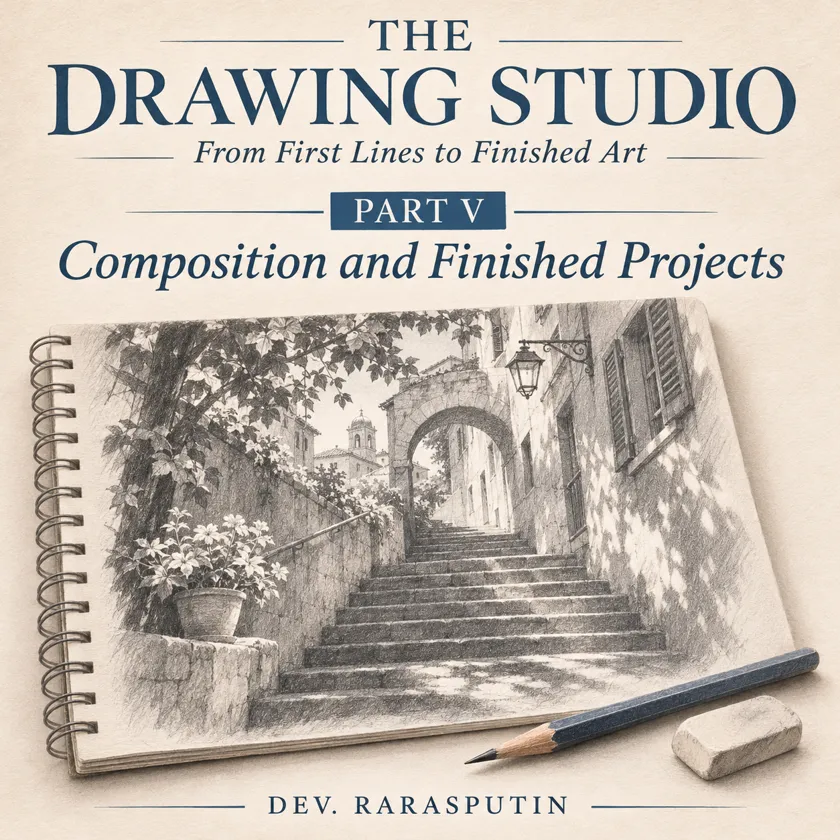
Concise instruction, step-by-step studies, focused drills, correction prompts, timed studies, variations, mini-projects and printable sketch space. The 200 pages include substantial drawing and reflection space.
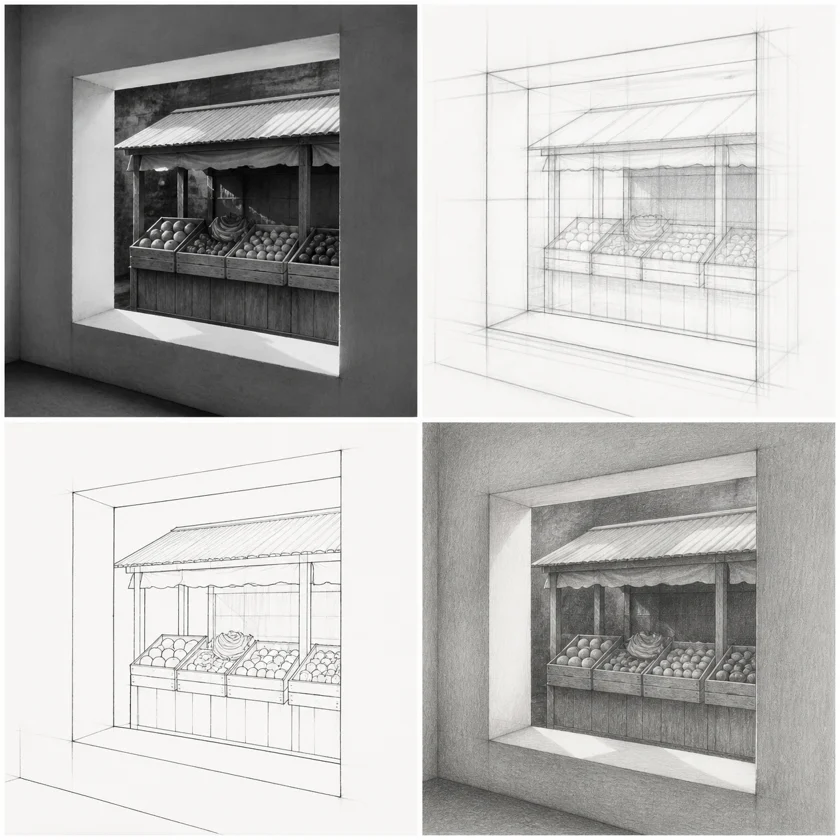
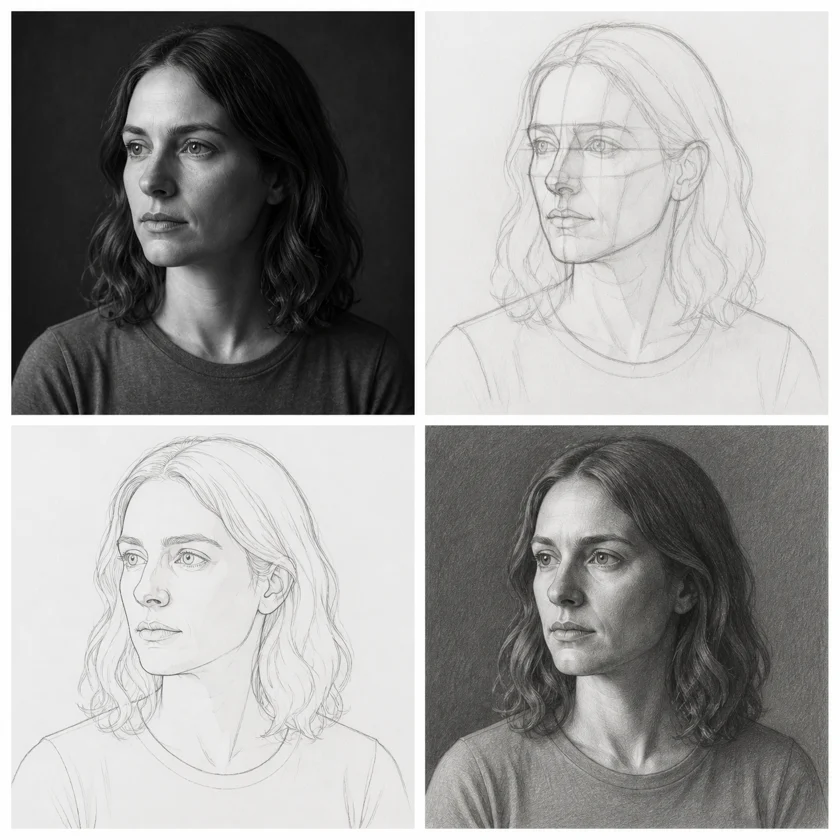
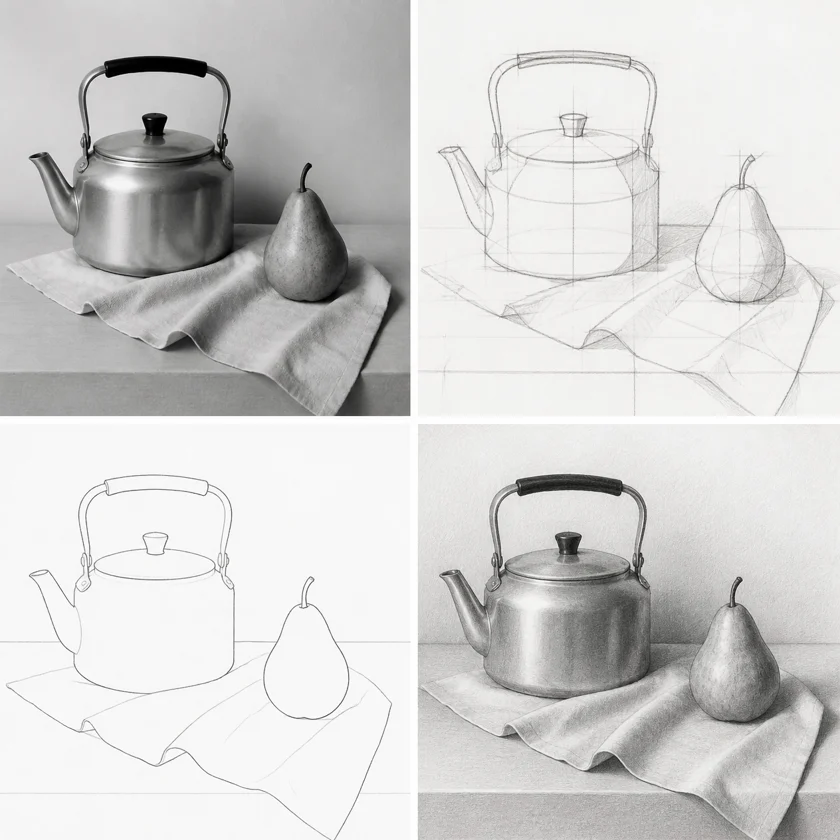
Four original AI-generated reference plates accompany simplified original vector diagrams. AI images can contain inconsistencies; check structure against real objects, consenting models or your own photos. Skill develops through practice and feedback.
Curriculum
A brief names the subject, intended emphasis, format and practical finish. It does not need to control every mark. Choosing the purpose first helps you judge later decisions about detail and value. For an advanced study, define a specific visual problem rather than promising a masterpiece or a professional outcome.
Practice: Write three different briefs for the same reference without drawing details.
Small thumbnails let you compare arrangements at low cost. Use only the largest shapes and value groups so the differences remain visible. Vary crop, placement or dominant direction rather than drawing the same plan repeatedly. Select a thumbnail because it serves the brief, not merely because it was first.
Practice: Create six small thumbnails using a limited number of shapes.
A focal area can be supported by contrast, edge clarity, detail, placement or surrounding quiet. These are choices to coordinate, not rules requiring a single obvious spotlight. Compare which parts compete for attention. Subordinate an unnecessary competitor before adding more emphasis to the intended focus.
Practice: Make three versions of a thumbnail with different emphasis choices.
A developed drawing can include quiet or lightly indicated passages. Decide where information is essential and where the viewer can complete a connection. Keep the underlying structure coherent. Selective finish is purposeful editing, not simply stopping wherever you became tired.
Practice: Compare a fully outlined thumbnail with a selectively developed version.
A portrait may emphasize expression, head turn, light or a graphic arrangement. Decide the current study's intention while respecting the actual subject's observed features. This choice guides the crop and treatment without replacing observation with a stereotype. A clear reference or a consenting sitter supports a more specific study.
Practice: Write three portrait intentions and sketch a small composition for each.
An advanced portrait benefits from a clear large value design before subtle rendering. Group the light and shadow family and compare the background's role. Small bright or dark accents should fit that structure. Preserve enough separation to keep the head readable without outlining every edge.
Practice: Create three portrait value plans with different background relationships.
A boundary may be sharp, soft, interrupted or visually lost where neighboring values are similar. Observe the reference and choose which distinctions matter to the drawing. Softening every edge does not automatically produce realism. Keep the most useful edges clear enough to explain structure and emphasis.
Practice: Make three small edge studies from the same portrait passage.
Before the darkest marks, check the whole head's proportion, turn and value grouping. A small feature correction may be less important than the head's overall width or tilt. Use a separate quick study when a change would otherwise destroy the larger drawing. Likeness and finish need repeated observation rather than a guaranteed formula.
Practice: Make a small correction map beside the portrait before changing it.
Objects become a composition through their spacing, overlap, relative size and value relationships. Test the arrangement before detailed drawing when you control the setup. A reference study can compare alternative crops instead. Avoid treating each object as a separate finished drawing pasted onto one page.
Practice: Make four arrangements or crops using the same three subjects.
A single-light study should preserve a consistent overall direction even when reflective and matte surfaces behave differently. Compare broad shadow placement, contact and major reflections. Do not force a metal highlight to imitate a pear's gradual shading. Let material differences sit within one coherent setup.
Practice: Create three small lighting plans with the same arrangement.
Texture should support the scale and focus of the drawing. A few marks can imply a surface without documenting every irregularity. Compare the size of texture marks with the object and the page. Reserve dense description for passages where it contributes to the brief.
Practice: Make texture samples at three scales and compare which suits the planned drawing.
A sustained project needs checkpoints for structure, values and finish. Keep an early planning thumbnail available and compare the large drawing with it. Document a correction rather than hiding every stage. Finish when the brief's visual purpose is met, with enough checking to avoid obvious unresolved structural conflicts.
Practice: Work through a small and a larger study of the same arrangement.
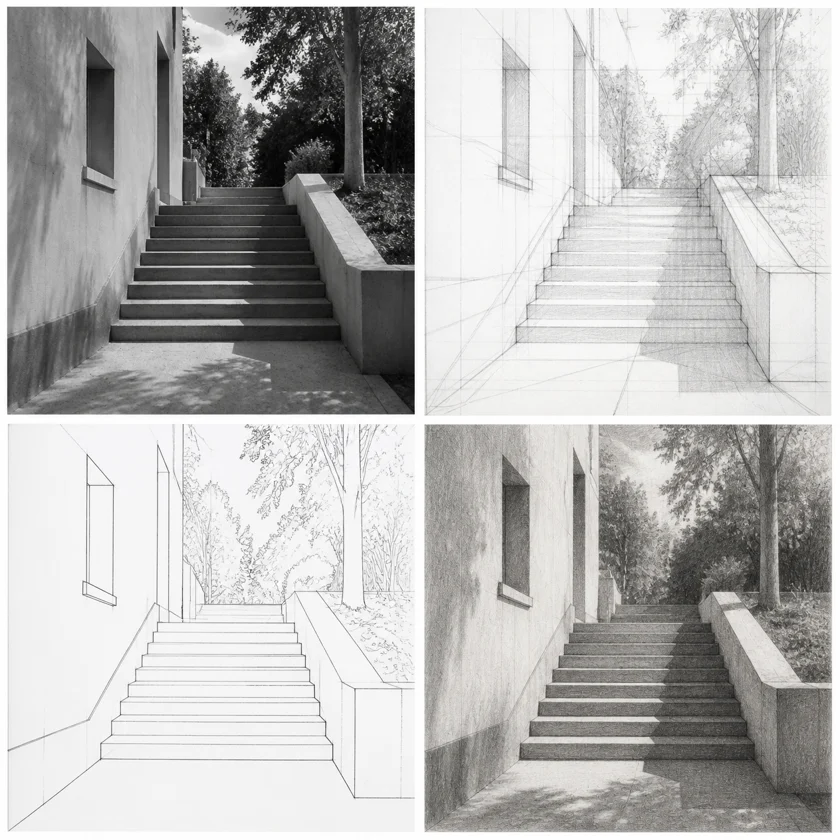
An urban stairway can be simplified into ground, wall, stair and foliage masses before detail. Check the major receding directions and the location of the horizon in a simplified construction. Use the AI plate as an illustrative scene, and compare real structures or photographs when exact architectural consistency matters.
Practice: Make three structural place studies with no surface texture.
Depth can be supported by overlap, scale, value grouping and edge differences. An advanced drawing can simplify distant areas to strengthen the chosen focus, but the treatment should suit the observed scene. Do not apply a rigid rule that every distant object must be faint regardless of its actual lighting.
Practice: Make three depth plans with different degrees of distant simplification.
A small portfolio is easier to assess when its selection has a clear purpose. Choose pieces that demonstrate relevant skills and include a few process examples when useful. Label the medium, date and reference source honestly. A study made from an AI reference should be identified as such rather than presented as observation from life.
Practice: Arrange six candidate drawings as small placeholders and test two different orders.
Progress is easier to plan when you name a visible skill rather than a total label such as amateur or professional. Review the work for recurring issues in proportion, structure, values, edges or composition. Choose one focus and a way to compare attempts. The series supports practice toward advanced work; it cannot guarantee professional competence.
Practice: Create a next-practice plan using one recurring visual issue and one comparison method.
Each plate compares a grayscale reference, construction, contour and value study. These are illustrative AI images, not photographs documenting a real subject.
Browser-local companion
Start with one skill and a manageable subject. Entries stay in this browser when saved; they are not sent to a server.
Each volume is sold separately at $5 USD. Optional digital practice is welcome; the lessons are designed for ordinary pencils and paper.